
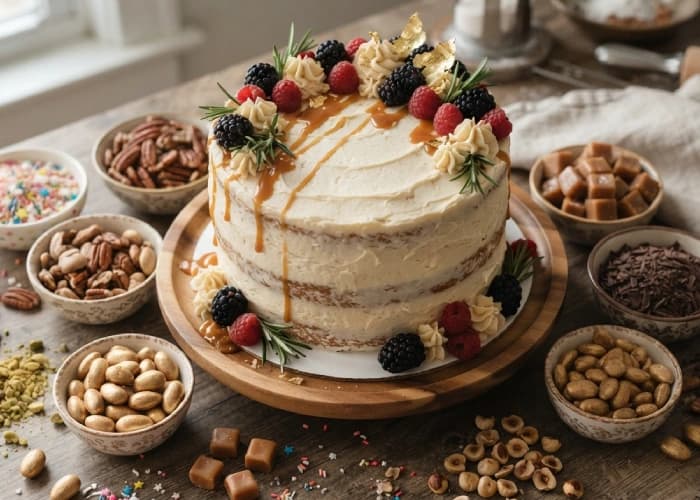
Best Cake Toppings for Every Type of Cake
The best cake topping depends on three things: flavour, texture, and occasion. Match those three correctly, and almost any topping will work. Get them wrong, and even an expensive topping can look out of place.
Ever cut into a cake that tasted fine but looked... plain? That's usually a topping problem, not a baking one. A cake's flavour comes from the batter and frosting, but its personality comes from what sits on top.
This guide covers the best cake toppings and topping ideas for different types of cakes, how much to use, and how to make them stick so your next cake looks like it came from a proper bakery. Whether you're after simple toppings for cakes at home or looking for cake decoration ideas for a professional setup, you'll find something useful below.
Why Toppings Make Such a Big Difference
Most cakes and frostings are soft. Your mouth gets used to that softness after the first bite, and the cake starts to feel a bit one-note. A crunchy or chewy topping breaks that pattern. Suddenly there's texture to think about, and often a new flavour too nutty, caramelised, fruity, or tangy.
There are three things a good topping adds:
Texture contrast – crunch against soft cream or sponge
Extra flavour – caramel, nuts, chocolate, or fruit layered on top of the base flavour
Visual appeal – colour, shine, and height that make a cake look finished
This is why many bakeries use toppings to give even simple cakes a more finished appearance, a principle echoed in Wilton's guide to decorating a cake, which points out that the right finishing touches can transform a home-baked cake into something that looks store-bought. It's often a two-minute step that changes how the whole dessert is perceived.
Best Cake Toppings for Popular Cake Types
Chocolate Cake Toppings
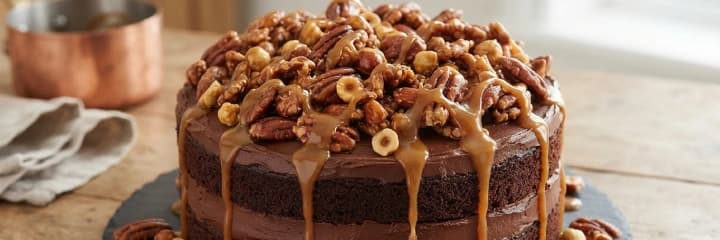
Chocolate is rich and slightly bitter, which is why it pairs so well with anything caramelised. Crunchy caramel-coated nuts scattered over the frosting add sweetness and bite without competing with the chocolate. For a neater finish, press the nuts gently around the base of the cake instead of piling them on top.
Vanilla Cake Toppings
Vanilla is the most flexible cake flavour, which means it's also the easiest to get wrong a plain vanilla cake with no topping can look unfinished. Coloured sprinkles give it a fun, festive look, while finely chopped nuts give it a more grown-up, elegant finish. Try a border of sprinkles along the edge with a light dusting in the centre.
Butterscotch Cake Toppings
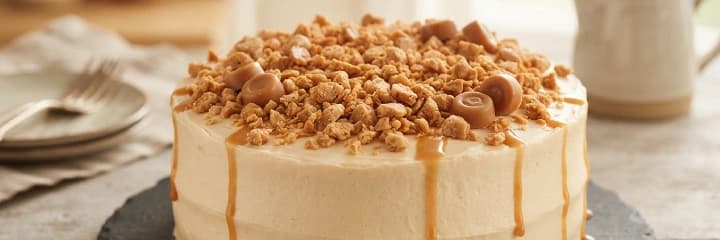
Butterscotch cake needs a topping that doubles down on the caramel flavour rather than distracting from it. Crunchy butterscotch pieces scattered over cream frosting keep the flavour consistent from the sponge to the very top layer, while adding the crunch that plain frosting is missing.
Cheesecakes
Cheesecakes have a dense, creamy texture that almost always needs a crunchy contrast. Caramelised nut pieces, a fruit compote, or crumbled biscuit work well scattered over the top just before serving.
Cake Toppings for Birthdays
Birthday cakes are meant to feel fun and celebratory, so this is where you can be the most playful. Layer sprinkles, small caramel bites, and a few chocolate pieces together for a "loaded" look that photographs well and appeals to all ages.
Wedding and Celebration Cakes
For formal occasions, restraint usually looks more expensive than excess. Gold-toned caramel bites, delicately placed nuts, or a light dusting of edible shimmer create an elegant finish without cluttering the design. Consistency matters most here; the same topping repeated neatly across every tier looks far more polished than a mix of different ones.
How Much Topping Is Too Much?
This is one of the most common mistakes in home baking: adding too much topping and burying the cake underneath it. A good rule of thumb:
Borders and edges – topping should cover roughly the outer 2–3 cm of the surface
Full coverage – use a light, even hand so the frosting colour still shows through
Accent pieces – 5 to 8 pieces spaced out is usually enough for a clean, decorative look
If you can't see any of the frosting underneath, you've likely used too much. The topping should enhance the cake, not hide it.
Texture, Flavour, and Colour: The Three Things to Balance
A topping that looks great but tastes wrong or tastes great but looks messy undoes the effort you put into the cake itself. Before choosing a topping, run it through these three checks:
Texture – Is the cake soft all the way through? If so, it likely needs a crunchy cake topping to balance it out. Cakes that already have crunch (like nut cakes) need a lighter touch on top.
Flavour – Does the topping complement the cake, or is it just decoration? Caramel and butterscotch work with chocolate and coffee. Fruit and light nuts work with carrot and spice cakes. Sprinkles work best on milder flavours like vanilla, where they aren't competing with anything strong.
Colour – Does the topping match the occasion? Gold and caramel tones feel premium and formal. Bright sprinkles feel playful and casual. White or pastel toppings suit red velvet and delicate cakes.
Budget-Friendly vs Premium Cake Decoration
You don't need an expensive setup to make good toppings for cakes work in your favour.
Budget-friendly ideas:
A simple border of sprinkles or chopped nuts around the base
A light dusting of cocoa powder or icing sugar alongside a small topping accent
Repeating one topping consistently rather than mixing several types
Premium ideas:
Glossy caramel bites arranged deliberately rather than scattered
Layered toppings a crunchy base layer with a lighter garnish on top
Matching the topping's colour tone to the occasion (gold for weddings, bright colours for birthdays)
The biggest difference between a "cheap-looking" cake and a "premium-looking" one usually isn't the cost of the topping, it's how neatly and consistently it's applied.
Storing Cakes Without Losing the Crunch
Crunchy toppings lose their crunch when they absorb moisture from the cake or the air. A few tips to keep them crisp for longer:
Add crunchy toppings just before serving wherever possible, rather than hours in advance
Keep the cake covered appropriately (a cake dome or loose covering works well) to prevent the sponge from drying out and to stop it absorbing odours from the fridge
If prepping in advance, store the topping separately in an airtight container and add it right before the cake is served
Keep caramel-based toppings away from high humidity they soften faster than nut-based ones
This matters more for professional settings, where cakes might sit for hours before being cut, but it's worth knowing even for a weekend bake. For more detail on keeping frosted cakes fresh, this guide on how to store cake breaks down the temperature and covering rules for different frosting types.
Unique Simple Cake Designs Using Toppings
You don't need advanced piping skills or fondant work to make a cake look unique; toppings alone can do most of the work. Here are a few simple cake designs anyone can try:
Border the base of a cream cake with a crunchy nut topping
Add a caramel drizzle before scattering nuts, so they stick better
Mix two toppings of similar colour (like caramel bites and toffee) for a layered but cohesive look
Keep vanilla cakes simple: one type of sprinkle, applied evenly
For frozen or layered desserts, add crunchy pieces just before serving to avoid sogginess
Create a single diagonal stripe of topping across the top instead of full coverage, for a modern, minimal look
These cake decoration ideas rely on precision rather than complexity; a neatly applied simple topping almost always looks more intentional than an elaborate one applied carelessly. For more no-fuss techniques, America's Test Kitchen's simple cake decorating ideas show a few clever tricks that don't require any special equipment.
Frequently Asked Questions
What topping goes well with chocolate cake? Caramelised nuts or toffee bites work best. They add sweetness and crunch without overpowering the chocolate flavour.
What toppings work best with butterscotch cakes? Butterscotch cakes pair naturally with more butterscotch crunchy butterscotch pieces sprinkled over the frosting keep the flavour consistent instead of introducing something that competes with it.
What are the most popular cake toppings? Sprinkles, chopped nuts, caramel bites, and toffee pieces are among the most widely used, mainly because they're easy to apply and work across many cake flavours.
Can I use the same topping for the top and sides of a cake? Yes, and it often looks better than using different toppings for each consistency reads as intentional rather than random.
Do toppings need to match the cake's flavour? Not always, but it helps. A topping that echoes or complements the main flavour (like caramel on chocolate) tends to taste more balanced than one chosen purely for looks.
Final Thoughts
Choosing a cake topping doesn't need to be complicated. Start with the cake's flavour, think about whether it needs crunch or softness, and keep the colour in mind for the occasion. Apply it while the frosting is still soft, don't overload the surface, and add anything crunchy as close to serving time as you can. Even the simplest toppings, applied with care, can turn into unique simple cake designs that stand out.
For bakers who want consistent, ready-to-use toppings from nut-based crunch to caramel and toffee pieces Ruby Enterprises makes a range of options designed for cakes, pastries, and frozen desserts. Whether you're baking at home or decorating for a bakery, having a reliable topping on hand makes the finishing step a lot easier.