
Premium Praline for Cake: A Guide for Professional Bakers
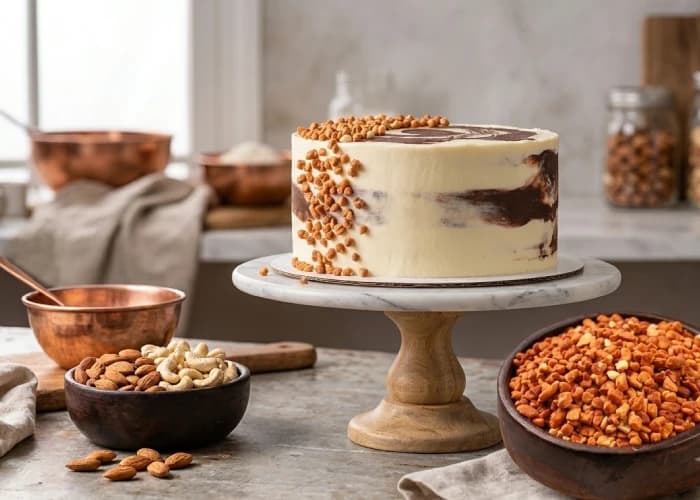
Creating an exceptional cake requires more than a soft sponge and smooth frosting. Professional bakers carefully select ingredients that improve flavour, texture, and presentation. One ingredient that brings all three elements together is Praline for Cake, known for its caramelised sweetness and rich nutty crunch.
Pralines are widely used in premium cakes, pastries, chocolates, and frozen desserts. Whether preparing a celebration cake or developing bakery products for commercial production, selecting the right praline can make a noticeable difference.
From almond praline to cashew praline, different varieties offer unique flavour profiles and applications. This guide explores praline ingredients, decoration techniques, benefits, and expert tips to help professional bakers create appealing desserts using quality ingredients from Ruby Enterprises.
Praline for Cake and Its Importance in Baking
Praline is a confectionery preparation traditionally made by combining nuts with caramelised sugar. Depending on the recipe and processing method, it can be produced as crunchy pieces, powder, or smooth paste.
In professional baking, pralines introduce a distinctive texture that complements soft cake layers and creamy fillings.
Adding praline can enhance several aspects of a dessert:
Creates a crunchy contrast to soft sponge.
Adds rich caramelised nut flavour.
Enhances cake decoration and visual appeal.
Complements chocolate, vanilla, coffee, and caramel.
Supports creative dessert combinations.
Choosing premium praline for cake allows bakers to develop consistent products while creating distinctive flavour experiences for customers.
Different Types of Pralines for Cakes
Different nuts produce different tastes and textures. Understanding these variations helps professional bakers select suitable ingredients for specific recipes.
Almond Praline
Almond praline offers a distinct nutty flavour and a satisfying caramelised crunch.
Ruby Enterprises offers Salted Almond Praline, combining crunchy almonds, caramel, and a touch of salt.
The balance between sweetness and saltiness makes this variety suitable for chocolate cakes, caramel desserts, pastries, and premium confectionery.
Professional bakers can use almond praline as a decorative topping or crunchy inclusion between selected cake layers.
Cashew Praline
Cashew praline provides a rich, buttery flavour with caramelised sweetness.
Ruby Enterprises offers Cashew Praline for bakery, chocolate, confectionery, and frozen dessert applications.
Its comparatively mild nutty flavour complements cream cakes, chocolate pastries, and caramel desserts.
Both varieties provide different flavour experiences, allowing bakeries to select ingredients according to customer preferences and recipe requirements.
Essential Praline Ingredients for Professional Bakers
Understanding praline ingredients helps bakers evaluate flavour consistency, texture, and product suitability.
Traditional praline generally contains nuts and caramelised sugar. Some formulations may include additional ingredients to achieve specific flavours or textures.
Common components include:
Almonds, cashews, or other nuts.
Sugar for caramelisation.
Salt for selected sweet-and-salty varieties.
Additional recipe-specific ingredients.
The caramelisation process influences colour, sweetness, and flavour.
Overheating sugar may produce bitterness, while insufficient caramelisation can affect the desired taste.
When selecting commercial praline ingredients, bakers should evaluate particle size, ingredient specifications, allergen information, and storage requirements.
Consistent ingredients help bakeries maintain uniform flavour and texture across multiple production batches.
Praline Nuts for Cake Decoration and Fillings
Praline nuts can be incorporated into different stages of cake preparation.
Their crunchy texture makes them useful for contrasting smooth cream, chocolate ganache, and soft sponge layers.
Cake Fillings
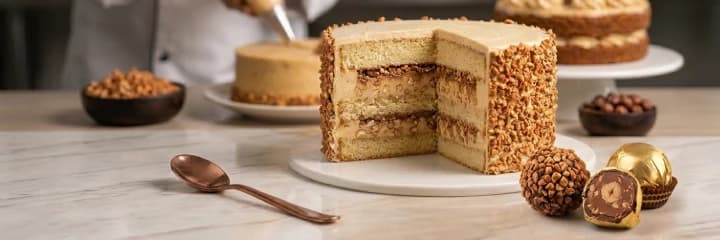
Crushed praline can be sprinkled between sponge layers to create a crunchy filling.
Cake Toppings
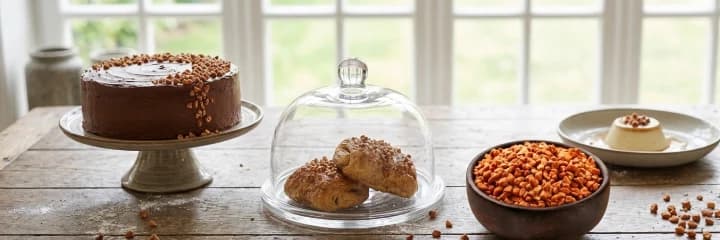
Caramelised pieces can be arranged over frosting or used around cake borders for an attractive finish.
Pastry Decoration
Fine praline pieces are suitable for individual pastries, cupcakes, and miniature desserts.
Chocolate Desserts
Praline can be incorporated into suitable chocolate-based preparations to create contrasting textures.
Selecting the right size of praline nuts is important. Smaller pieces generally work better for delicate decorations, while larger pieces create a more noticeable crunch.
Praline Chocolate Cakes and Dessert Combinations
Chocolate and praline work well together because rich cocoa flavours complement caramelised nuts.
A praline chocolate cake can combine chocolate sponge, ganache, cream, and crunchy praline inclusions.
For example, a chocolate celebration cake can include cashew praline between selected layers and a light almond praline garnish on top.
Other dessert applications include brownies, chocolate pastries, mousse cakes, truffles, and layered desserts.
When preparing praline chocolate desserts, bakers should balance the sweetness of the caramelised nuts with the chocolate.
Dark chocolate can provide a pleasant contrast because its stronger cocoa flavour balances the sweetness of praline.
Carefully measured quantities help maintain the original chocolate flavour while introducing additional texture.
How to Use Praline for Cake Decoration
Decorating cakes with praline requires careful ingredient selection and application.
Step 1: Prepare the Cake Sponge
Bake the preferred sponge and allow it to cool completely before assembling the cake.
Step 2: Prepare the Frosting
Choose whipped cream, buttercream, or chocolate ganache according to the recipe.
Step 3: Add Praline Fillings
Sprinkle a measured quantity of crushed praline between selected sponge layers.
Step 4: Apply the Outer Frosting
Cover the assembled cake evenly and smooth the surface.
Step 5: Decorate with Praline
Use finer pieces around the sides and larger pieces for selected decorative accents.
Step 6: Complete the Presentation
Add complementary decorations such as chocolate curls or a restrained caramel drizzle.
When using praline for cake, professional bakers should evaluate the finished texture after refrigeration because moisture can gradually soften crunchy inclusions.
Ice Cream with Pralines and Frozen Desserts
Praline is not limited to cakes and pastries. It is also widely used in frozen dessert applications.
Ice cream with pralines combines smooth, creamy ice cream with crunchy caramelised nuts, creating an appealing contrast.
Popular applications include vanilla ice cream, chocolate ice cream, caramel sundaes, frozen cakes, and layered dessert cups.
For commercial ice cream manufacturers, ingredient size and texture stability are important considerations.
Both almond and cashew varieties can complement different ice cream flavours.
Developing ice cream with pralines also gives bakeries an opportunity to use suitable crunchy inclusions across cakes and frozen dessert offerings.
The final recipe should be tested to determine how the nuts perform during freezing and storage.
Pralines and Cream for Premium Desserts
Pralines and cream create a popular dessert combination because smooth cream balances caramelised nut pieces.
The contrast between creamy and crunchy textures works well in layered cakes, pastries, dessert cups, and frozen desserts.
For example, a vanilla sponge layered with lightly sweetened cream and crushed cashew praline creates a simple dessert with contrasting textures.
Salted almond pieces can also complement chocolate cream by providing a subtle salty note.
When creating Pralines and cream desserts, bakers should avoid excessive quantities of crunchy ingredients.
A balanced combination allows the nut flavour to remain noticeable without overwhelming the smooth texture of the cream.
Benefits of Premium Pralines in Bakery Products
Premium pralines offer several advantages for professional bakery applications.
Improved texture: Crunchy pieces contrast with soft sponge and creamy frosting.
Rich flavour: Caramelised nuts provide sweetness and distinctive nutty notes.
Attractive decoration: Golden pieces create visually appealing cake toppings and borders.
Versatile applications: Praline can be used in cakes, chocolates, pastries, and frozen desserts.
Menu innovation: Different praline varieties allow bakeries to develop new recipes using familiar cake bases.
However, excessive quantities can increase sweetness, and prolonged contact with moisture may reduce crunch.
Nut-containing ingredients also require appropriate allergen handling and labelling.
Testing finished desserts under realistic storage conditions helps ensure consistent results.
Common Mistakes When Using Praline for Cake
Even premium ingredients can produce disappointing results when applied incorrectly.
One common mistake is adding too much praline, making the dessert excessively sweet or crunchy.
Another mistake is incorporating crunchy pieces into moist fillings too early, which may soften their texture.
Using oversized pieces in delicate pastries can also affect presentation and slicing.
Professional bakers should follow these practices:
Use measured quantities for consistent results.
Select appropriate particle sizes.
Avoid prolonged exposure to humidity.
Follow supplier storage recommendations.
Test completed cakes before commercial production.
The ideal Praline for Cake application should enhance the dessert without dominating its original flavour.
Premium Pralines from Ruby Enterprises
Choosing a reliable supplier is important for bakeries that require consistent ingredients.
Ruby Enterprises offers premium Cashew Praline and Salted Almond Praline for bakery, chocolate, confectionery, and frozen dessert applications.
The company supports commercial requirements involving custom sizes, texture development, product formulations, bulk manufacturing, and research and development.
For professional bakers, consistent flavour and particle size can simplify production and improve the uniformity of finished desserts.
Before ordering, businesses should confirm product specifications, packaging, allergen information, minimum order quantities, and suitability for their intended applications.
Conclusion: Choosing the Right Praline for Cake
Premium Praline for Cake can enhance ordinary desserts by introducing caramelised flavour, crunchy texture, and attractive decoration.
From almond praline to cashew praline, different varieties provide opportunities to create distinctive cakes, pastries, chocolates, and frozen desserts.
Successful results depend on selecting suitable ingredients, balancing sweetness, and applying praline carefully.
Ruby Enterprises offers praline solutions for professional bakers and commercial dessert manufacturers.
Explore the Ruby Enterprises Pralines Collection and contact the team for product specifications, customisation options, and bulk enquiries.
Frequently Asked Questions
1. What is praline used for in cakes?
Praline is used for cake fillings, crunchy layers, decorative toppings, and selected frosting preparations. It introduces caramelised nut flavour and texture to chocolate cakes, sponge cakes, pastries, and mousse desserts. The application depends on whether the praline is supplied as crunchy pieces, powder, or paste.
2. What is the difference between almond praline and cashew praline?
Almond praline generally provides a distinct nutty flavour and firm crunch, while cashew praline offers a milder, buttery taste. Ruby Enterprises supplies Salted Almond Praline and Cashew Praline for different dessert applications. The best option depends on the desired sweetness, flavour balance, and texture.
3. Can praline be used as a cake filling?
Yes. Crushed praline can be incorporated between cake layers with suitable cream or chocolate fillings. Praline paste may also be used in certain frosting recipes. However, crunchy pieces can soften after prolonged exposure to moisture, so bakers should test the finished dessert during storage.
4. How do you keep praline crunchy in cakes?
Store unused praline in suitable moisture-protective packaging and follow the manufacturer's storage instructions. Avoid prolonged contact with wet fillings when crispness is important. Applying exposed decorations closer to serving and testing cakes after refrigeration can help maintain the desired texture.
5. Where can professional bakers buy praline for cakes?
Professional bakers can explore Ruby Enterprises' praline range, including Cashew Praline and Salted Almond Praline. The company supports bakery, chocolate, confectionery, and frozen dessert applications. Businesses can enquire about product specifications, custom sizes, bulk manufacturing, and supply requirements through its official website.